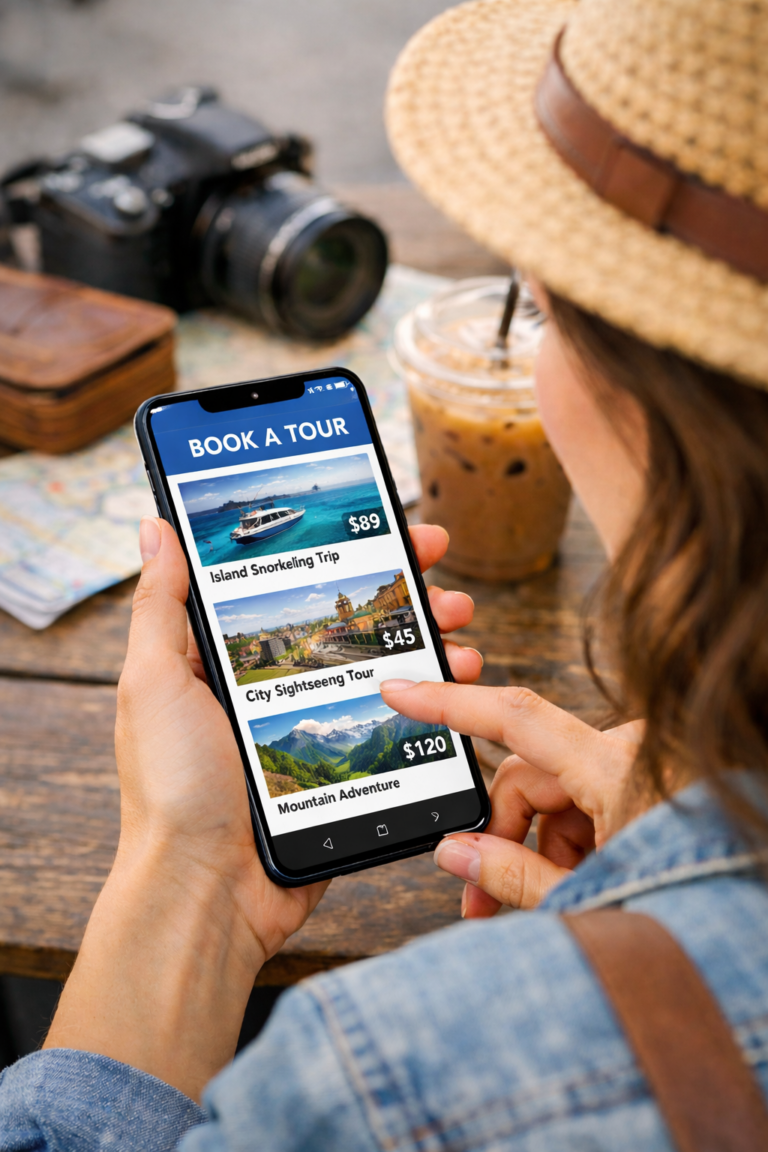
If your tour business is getting enquiries through Facebook, that’s a good sign — people are finding you. But relying on Facebook alone can quietly cost you bookings: travellers want quick answers, clear pricing, and a simple way to lock in a date.
The fix doesn’t have to be a big “fancy website”. Even a clean one‑page site can make it easier for guests to trust you, understand your offer, and take the next step.
5 signs it’s time for a better website (even a one‑pager)
Here are the most common signs we see with tour operators who are ready to upgrade from Facebook‑only.
1) People keep asking the same questions in messages
If you’re repeatedly answering “How much is it?”, “How long is the tour?”, “Where do we meet?”, or “Is pickup included?”, your customers are telling you something: the information they need isn’t easy to find.
A simple website solves this by putting your key details in one place — so enquiries become better quality and easier to convert.
2) Your prices or packages aren’t clear (so people hesitate)
You don’t need a full price matrix, but guests do need enough to feel confident. If your prices are “DM us”, many travellers will keep scrolling — especially if they’re comparing options.
A one‑page website can include a simple “Packages & pricing” section (even “From $X” or “Typical packages”) so guests can self‑qualify before they message you.
3) You’re losing bookings because it’s hard to take the next step
On Facebook, the next step is usually “send a message and wait”. That can work — but it adds friction. Travellers often want to book fast, especially when they’re planning a trip after hours or from another time zone.
A website lets you make the next step obvious: a big “Book / Enquire” button, WhatsApp click‑to‑chat, a simple enquiry form, or a booking link (even if you’re using a third‑party platform).
4) Mobile visitors struggle (and mobile is most of your traffic)
Most travellers browse on their phone. If your info is spread across old posts, pinned posts, photo captions, and comments, it’s easy to miss — and hard to navigate on mobile.
A mobile‑friendly website gives visitors a clean path: what you offer → what it costs → when to go → how to book.
5) You don’t look as established as you actually are
This one is big. You might run an excellent tour, but if your online presence is only a Facebook page, some guests will wonder if you’re legit — especially if they’re paying in advance.
A website builds trust quickly with a few basics: real photos, guest reviews, a short “About us”, clear contact details, and a professional feel that matches your service.
What a “good enough” one‑page tour website includes
If you want the simplest version that still converts, we recommend:
• Clear headline: what you do + where (e.g., “Private reef snorkelling tours — Coral Coast, Fiji”).
• Your top 1–3 tours: short descriptions, duration, inclusions, and who it’s best for.
• A simple pricing section: from $X, or package options, plus what’s included.
• Trust builders: real photos, 3–6 reviews/testimonials, and any licences/awards if relevant.
• A clear call to action: Book / Enquire button, WhatsApp click‑to‑chat, and/or a quick enquiry form.
• Quick answers: meeting point, pickup, what to bring, cancellation/weather policy.
The good news: you don’t have to abandon Facebook
Facebook is still great for discovery and conversation. The website’s job is to do the “closing” work: answer key questions, show what you offer, build trust, and make booking easy.
Think of it like this:
Facebook = where people find you
Your website = where people decide
Want us to take a quick look at yours?
If you’re a tour operator and you’re not sure whether your current setup is costing you bookings, we can take a quick look and tell you the simplest next step.
And if you’re ready, we can build a clean one‑page starter site that’s mobile‑friendly, easy to update, and designed to convert “interested” into “booked”.
Message us and we’ll point you in the right direction.